
There are certain journeys that feel less like travel and more like stepping into the pages of history itself. This is one of them.
To follow the life of Sir Winston Churchill across England is to move through some of the grandest landscapes and most stirring stories the country possesses – from the ancient houses of Dorset and Oxfordshire to the hidden wartime corridors beneath London, and finally to the peaceful Kentish hills where Churchill painted, wrote, reflected, and watched the sun sink over the Weald.
This is not merely a history tour. It is an immersion into courage, intellect, grandeur and endurance. A journey hosted by brilliant historians, charismatic storytellers, aristocratic custodians, and those who bring Churchill’s extraordinary world vividly to life. Along the way, you will stay in some of England’s loveliest country house hotels, dine splendidly, and travel through landscapes that shaped not only Churchill himself, but the very spirit of Britain.
And while this itinerary unfolds beautifully over three unforgettable days, many guests choose to linger longer – perhaps adding extra nights in Oxfordshire, extending into the Cotswolds, or spending additional time in the gardens and great houses of Kent and Sussex. After all, Churchill himself understood the value of lingering in beautiful places.
Day One
Minterne House & Ditchley Park
Roots, Resilience and Wartime Refuge
Your journey begins in the rolling green folds of Dorset, where the story of Churchill’s lineage quietly stirs amongst cedar trees, ancient lawns, and the mellow stone of Minterne House.
Hosted by the wonderfully engaging Lord Henry Digby, this is one of those rare English houses where history does not feel arranged for visitors, but genuinely lived within. Here, amidst family portraits, private stories, and rooms filled with inherited memory, you begin to understand the bloodlines, friendships, ambitions and quiet eccentricities that helped shape Churchill long before he ever stood at a despatch box.
The Dorset countryside itself seems to lend perspective. The valleys are soft, the gardens glorious, and the atmosphere deeply English in the very best sense – civilised, warm, layered with stories, and entirely unhurried.
From Dorset, the narrative moves north into Oxfordshire and the remarkable world of Ditchley Park.
If Minterne tells the story of ancestry, Ditchley reveals Churchill in the midst of national peril. During the Blitz, when Chequers itself became vulnerable to German bombing, Churchill retreated here on weekends under conditions of extraordinary secrecy. Behind the beauty of this great country estate lay one of the quiet strategic sanctuaries of wartime Britain.
As you walk through elegant rooms where Churchill dined, debated and planned, expert historians bring alive the extraordinary tension of those years – the late-night conversations, the military calculations, the smoke curling above brandy glasses while Britain stood alone against tyranny.
And yet Ditchley remains astonishingly beautiful. That, perhaps, is part of Churchill’s England too: the strange and glorious contrast between civilisation and catastrophe.
For your Oxfordshire stay, we might suggest the timeless elegance of Estelle Manor, the scholarly charm of Old Parsonage Hotel, or the restorative tranquillity of Le Manoir aux Quat’Saisons.
Day Two
Blenheim Palace & Bletchley Park
Birth, Destiny and the Intellect of War
There are few arrivals in England more stirring than the first glimpse of Blenheim Palace.
Rising from the Oxfordshire landscape with operatic grandeur, this immense palace is more than Churchill’s birthplace. It is the setting of destiny itself.
Here, amongst vast state rooms, heroic portraits, sweeping lakes and avenues lined with ancient trees, Churchill’s story truly begins. It was here he first inhaled the atmosphere of history and power. Here he proposed to Clementine. Here he returned throughout his life, drawn repeatedly back to the grandeur and continuity of Blenheim’s world.
Your private hosts and historians bring humanity to the legend – Churchill the romantic, Churchill the writer, Churchill the young parliamentarian full of ambition and impatience. One begins to see not merely the statesman, but the man himself.
Then comes one of the most extraordinary intellectual sites in Britain: Bletchley Park.
Hidden behind its quiet Buckinghamshire façade lies one of the greatest triumphs of modern intelligence. Churchill understood its importance instantly. The codebreakers here shortened the war, saved countless lives, and altered world history itself.
As you move through the huts and corridors where Alan Turing and his colleagues laboured in absolute secrecy, the scale of Britain’s wartime ingenuity becomes breathtakingly clear. The clatter of machines, the tension of intercepted messages, the urgency of invisible warfare – it all comes vividly alive through expert storytelling.
And throughout the day, the countryside rolls gently beyond the windows: villages, church spires, fields and hedgerows continuing peacefully while history thundered quietly beneath the surface.
Day Three
Chartwell & The Churchill War Rooms
Leadership, Legacy and the Last Great View
Your final day begins in Kent at Chartwell – perhaps the most intimate and revealing of all Churchill’s homes.
If Blenheim represents destiny, Chartwell represents contentment.
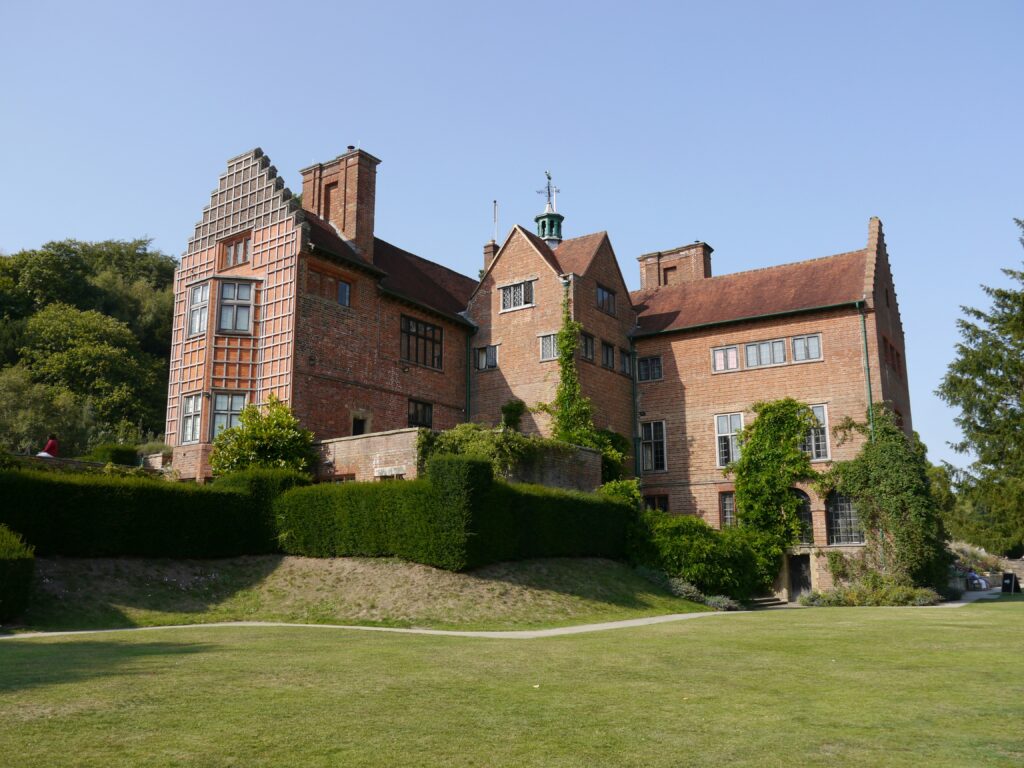
This beloved house, nestled amongst the wooded hills of Kent, was Churchill’s sanctuary. Here he painted, wrote books, laid bricks with his own hands, fed black swans, entertained friends, and found peace between the storms of political life.
As you wander through his studio, gardens and personal rooms, Churchill suddenly feels wonderfully human. You can almost picture him pausing at the terrace, cigar in hand, surveying the landscape he adored.
Then, from the serenity of Kent, you descend into the hidden wartime nerve centre beneath Westminster: the Churchill War Rooms.
Few places in Britain carry such emotional weight.
The underground corridors remain eerily preserved – maps pinned to walls, telephones waiting silently, chairs pushed back as though the Cabinet might return at any moment. Here Churchill directed Britain through its darkest hours with a combination of defiance, eloquence and sheer force of will that still resonates profoundly today.
To stand within these rooms is to feel history not as something distant, but immediate and deeply human.
For your final evenings, perhaps retreat to the timeless luxury of Beaverbrook, the romantic seclusion of Gravetye Manor, or the restorative elegance of South Lodge.
Because this journey, much like Churchill himself, deserves a glorious finale.
To follow Churchill through these landscapes is to understand not only the man, but the country he loved and defended so fiercely. Grand palaces, hidden wartime rooms, rolling countryside and ancient estates combine to create something unforgettable: a journey through courage, character and the enduring spirit of Britain.
Utterly glorious.