
Some requests begin with a famous landmark, a celebrated hotel, or a table at the restaurant everyone is talking about.
And then there are the quieter ones. The ones that tell you something far more personal.
For Erin, it was sea glass.
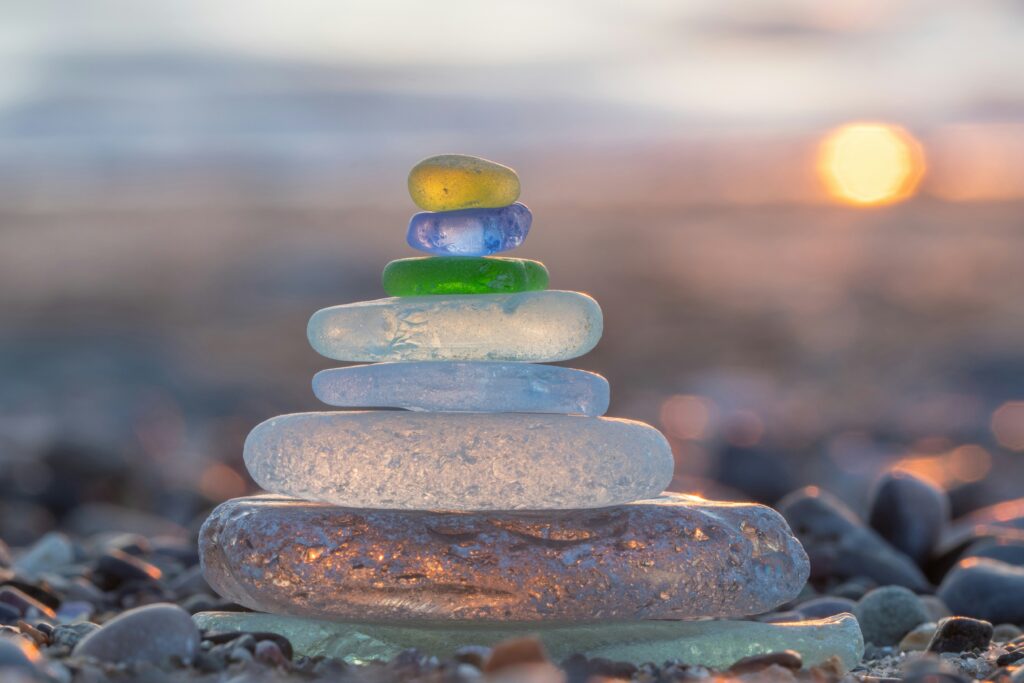
Not simply a passing interest, but a real love – the sort of collecting that turns a walk along the shoreline into something slower, more observant, and rather meditative. Each piece has its own colour, shape, texture and story. Some are soft greens and blues, others are rarer flashes of red, yellow, purple or milky white. All of them have been changed by time, tide and patience.
So when Erin and Tony began planning their first visit to the UK, we knew this part of the journey needed to feel personal. Of course there would be London. Of course there would be history, culture, and the sense of occasion that comes with being in the capital at such a memorable time. Their final day in London would even see them joining the crowds for the Coronation before continuing on to their cruise.
But between the city and the celebration, there was room for something gentler.
There was room for Seaham.
Set on the north eastern coast, not far from Durham, Seaham is known among sea glass collectors as one of the most special places in the UK. Its beaches are scattered with small, beautifully smoothed fragments of glass – pieces that have been shaped by the North Sea and carry with them the story of the area’s industrial past.
It made perfect sense for Erin. Not just because she collects sea glass, but because Seaham offers something more than a beachcombing afternoon. It offers context. It offers a connection between landscape, history, industry and beauty. It is a place where something once discarded has been transformed into something treasured.
Their journey began in London, with a morning at One Aldwych and a proper full English breakfast before the concierge arranged their car to King’s Cross. From there, they travelled north by train to Hartlepool, an easy and rather pleasing way to watch the country change around them – London giving way to open countryside, then to the distinctive coastline of the North East.
On arrival, they checked in to Seaham Hall, where their Sea View Junior Suite gave them exactly the right setting for a couple of slower days by the coast. Elegant, calm and close to the shore, it was the sort of hotel that allowed the purpose of the trip to unfold naturally, rather than feeling overly scheduled.
And then came one of those small details that makes an itinerary feel truly considered.
Chrissie Cameron, one of the receptionists at Seaham Hall, makes her own sea glass jewellery. She was looking forward to meeting Erin and, even better, was able to share the local knowledge that only someone with a genuine connection to the place can offer. The best beaches, the best stretches to explore, where to look, what to notice – the kind of insider guidance that turns a simple walk into something much more memorable.
The next morning was left deliberately open.
No rushed departure. No overplanned schedule. Just time to enjoy the serenity of Seaham Hall and head out to the beaches in search of the famous Seaham sea glass. The hotel team could guide them towards the right spots, and bikes were available for exploring a little further along the coast.
It was exactly the sort of morning Erin had hoped for: quiet, personal, and shaped entirely around something she loved.
The glass itself has a fascinating story. Seaham’s connection to glass production dates back to the nineteenth century, when the area became known for its bottle works. The Londonderry Bottle Works, which operated until the early twentieth century, produced huge quantities of hand-blown bottles, many of which were exported by ship to London and Europe. Waste glass, including rejected and end-of-day pieces, was often discarded into the sea.
Over time, the tide did what only nature can do. It softened the edges, frosted the surfaces, and returned those discarded fragments to the shore as small, coloured treasures.
For collectors, Seaham has become known for everything from classic clear and green pieces to rarer shades of blue, red, yellow, aqua and milk glass. The most prized finds are often the so-called Seaham Multis – pieces with more than one colour, believed to be linked to decorative glassmaking waste from the wider region. For someone like Erin, each discovery is not only beautiful, but full of history.
Later that day, the itinerary gently shifted from coast to city.
A car collected Erin and Tony from Seaham Hall and drove them into Durham, just 45 minutes away. There, they met Amanda, a brilliant local guide who is passionate about the city she calls home. Before the walking tour began, Amanda took them to Flat White Kitchen for lunch – relaxed, local, and exactly right for the pace of the day.
Then came Durham itself.
Amanda led them through the city on foot, sharing not only its great landmarks but also the feeling of the place. Born and raised in Durham, she speaks about the North East not as a guide reciting facts, but as someone with a real love for the region. That makes all the difference.
The tour included Durham Cathedral, one of the most beautiful and atmospheric buildings in England. For visitors who love history, it is difficult not to be moved by its scale, age and quiet grandeur. It added another layer to the trip – from the industrial history of Seaham’s glass to the spiritual and architectural history of Durham.
For Tony, whose interests include the Second World War and Sir Winston Churchill, this wider sense of British history was an important part of the journey too. The whole visit had been designed to bring together both of their interests: Erin’s love of sea glass and literature, Tony’s interest in history, and their shared excitement at seeing England for the first time.
After the walking tour, their car returned them to Seaham Hall, with dinner arranged that evening at The Lamp Room in Seaham. It was a lovely way to end the day: coastal, unpretentious, and rooted in the place they had come to experience.
What made this itinerary special was not that it was elaborate. In fact, quite the opposite.
It was special because it listened.
Erin had a passion, and rather than treating it as a small footnote, we allowed it to shape the journey. A couple of days were built around sea glass, but also around the landscape that creates it, the history that explains it, and the people who could bring it properly to life.
That is often where the most memorable travel moments are found. Not in doing everything, but in doing the right things, in the right way, at the right pace.
For Erin, Seaham was never just a stop on the map.
It was the place where a personal passion met a stretch of English coastline, a little industrial history, a beautiful hotel, a generous local welcome, and the quiet thrill of finding something small and lovely at the water’s edge.