
Memorable Coronations in British History
Ah, the grand spectacle of the coronation of an English monarch, an event that has dazzled the eyes of commoners and nobles alike for centuries. From the crowning of William the Conqueror in 1066 to the recent coronation of Elizabeth II in 1953, these events have marked the beginning of a new era for England and its people.
Let us travel back in time to witness the pomp and circumstance of some of the most notable coronations in English history. Our journey begins with the coronation of William the Conqueror, who was crowned on Christmas Day in 1066 in Westminster Abbey. The coronation was conducted in Latin, as French was the official language of the court at the time.
It was a momentous and rather fraught occasion, as it marked the end of Anglo-Saxon rule and the beginning of Norman domination in England. The Norman conqueror sought to assert his authority over the fractious English nobility. But with the weighty crown of St. Edward upon his head, William was able to command the loyalty of his new subjects, and cement his place in history as England’s first Norman king.
Fast forward a few centuries to the coronation of Henry VIII in 1509. The event was held in the Chapel of Westminster Abbey, which had been recently rebuilt by Henry’s father, Henry VII. The coronation was a lavish affair, with the new king decked out in the finest regalia and accompanied by a retinue of lords and ladies.
The coronation was marked by a procession that wound through the streets of London, and a banquet that featured no less than 200 dishes. But it was also notable for the presence of a certain young princess, who would go on to become one of the most famous queens in history – Anne Boleyn.
Every monarch used their coronation to assert their divine right to rule, and Henry VIII was no different. His coronation marked the beginning of a tumultuous reign that would see England break away from the Catholic Church and undergo significant political and social changes.
Skipping ahead again to the coronation of Queen Elizabeth I in 1559, we find ourselves in the midst of a religiously charged atmosphere. Elizabeth was crowned in the Protestant rite, a sharp departure from the Catholic ceremony of her half-sister, Mary I. The coronation was marked by the queen’s declaration that she would uphold the Protestant faith, which was met with cheers from the Protestant nobles in attendance.
The new queen was determined to make a show of strength, and her coronation procession was a triumph of Tudor propaganda. The queen was carried through the streets on a golden litter, flanked by knights in shining armour, while crowds cheered and waved flags. It was a spectacle that reinforced Elizabeth’s image as a powerful and beloved monarch, and preceded a reign which is believed to be one of the greatest in British history.
Moving on to the 20th century, we come to the coronation of George VI in 1937. This event was significant not only for the new king’s ascension to the throne but also for its broadcasting to the masses. It was the first coronation to be broadcast on radio and the first to be filmed for newsreels. The coronation was a sombre affair, as it took place just a year after the abdication of George’s brother, Edward VIII.
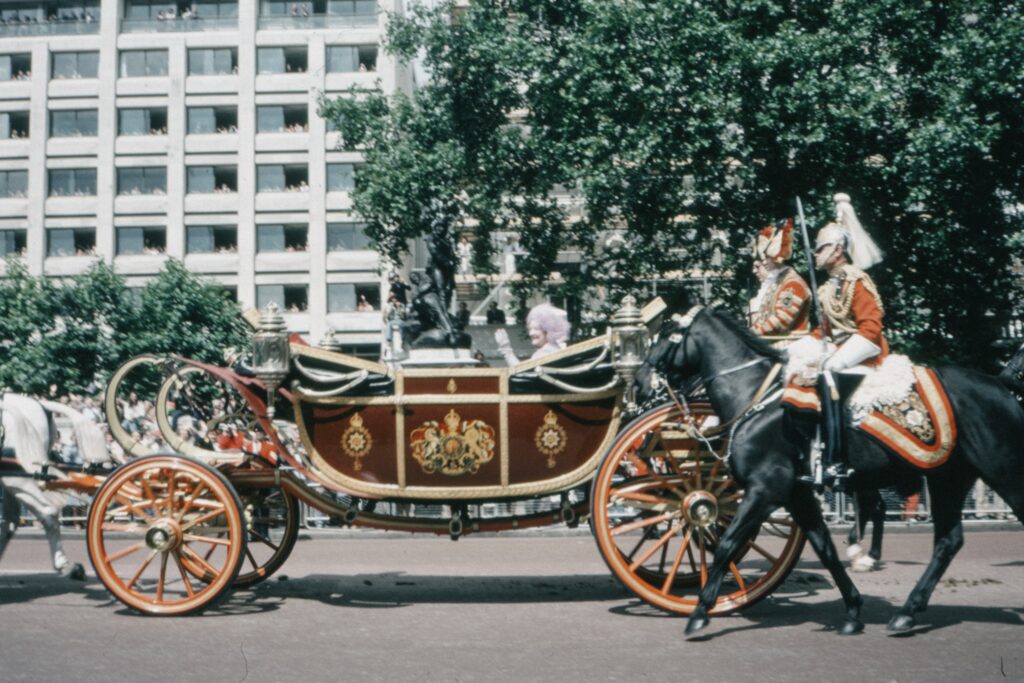
Finally, the most recent coronation in English history, that of Queen Elizabeth II in 1953, our much loved monarch who reigned longer than any other. The coronation was a grand affair, with an estimated three million people lining the streets of London to catch a glimpse of the new queen. Elizabeth was crowned in Westminster Abbey, the same location as many of her predecessors. The ceremony was broadcast on television, allowing millions of people around the world to witness the spectacle first-hand.
From the Latin words spoken at William the Conqueror’s coronation to the global broadcast of Queen Elizabeth II’s, these events have captured the imagination of generations of people. They have marked the beginning of new reigns and new eras, and their pageantry and grandeur continue to inspire awe to this day.